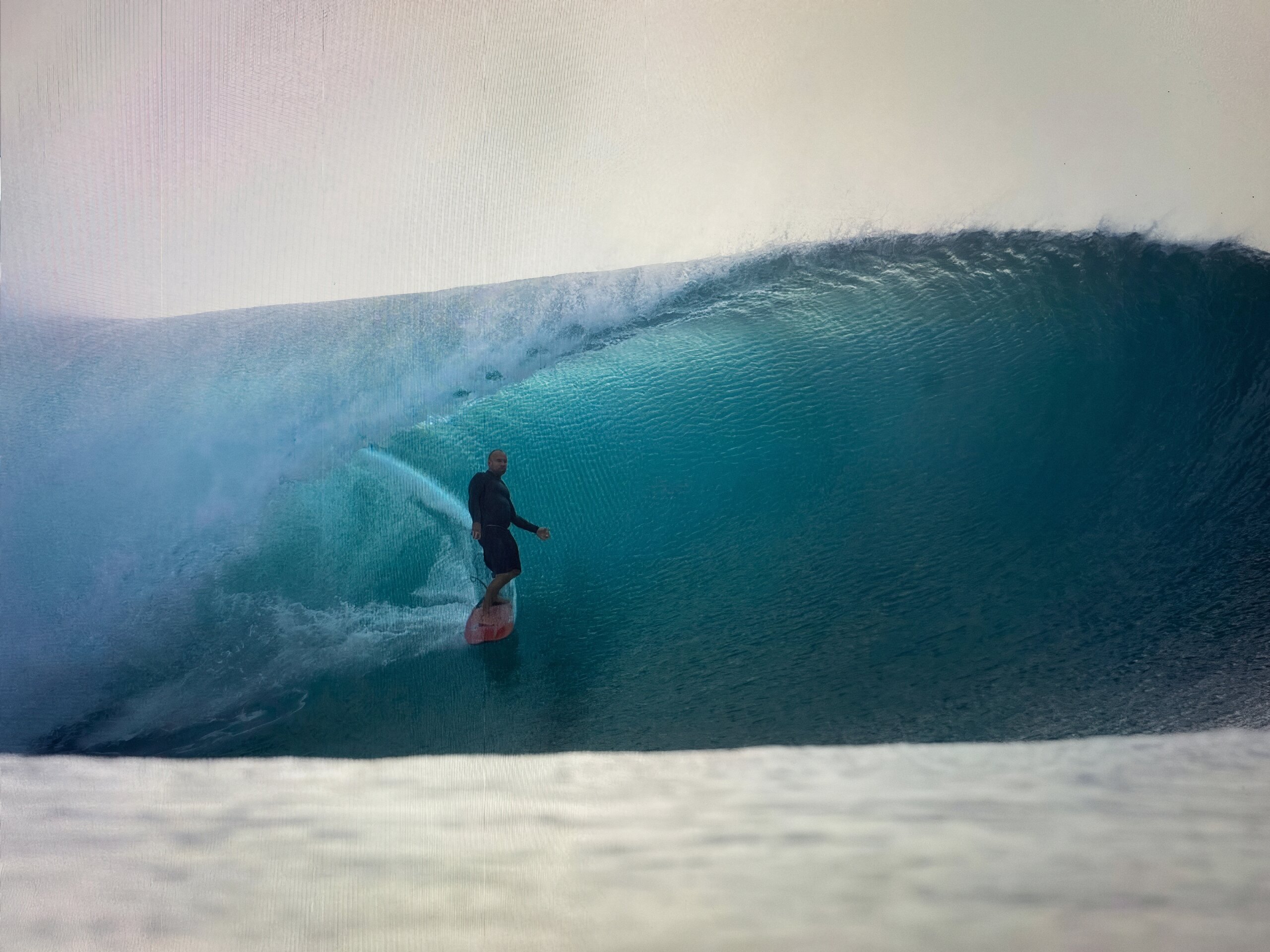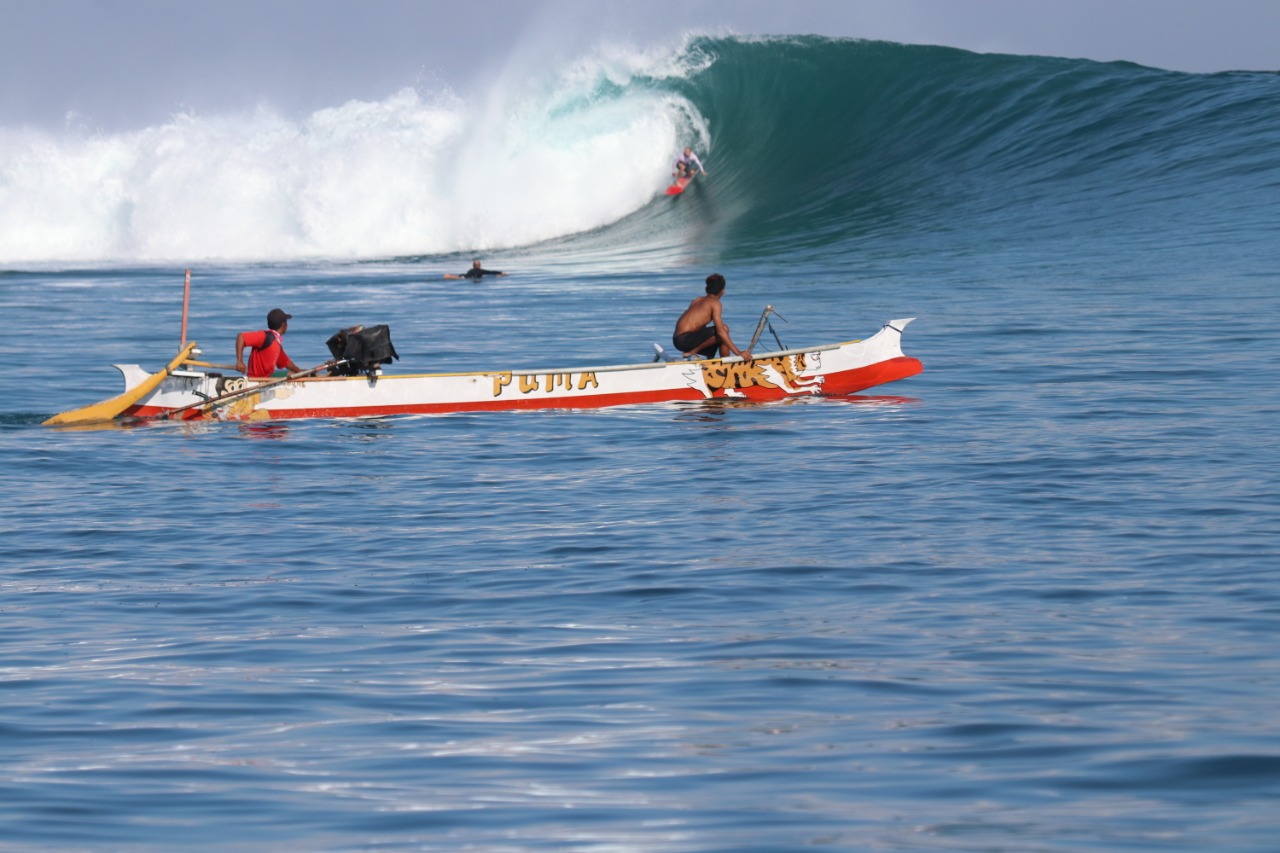
There is a word for them, and it has not lost its meaning even in the social-media decades. Waterman. It does not mean a fisherman. It does not mean a sailor. It does not, exactly, mean a surfer either. It means the person who, on any given morning, can read the wind and the current and the swell, and can do what the wind and the current and the swell will allow — pull a line of bait through the channel, paddle a board across a riptide, run a boat through a reef pass at low tide on the right moon. The waterman is not the specialist. The waterman is the generalist of the sea.
There are not many of them left. The world has specialised. The professional surfer is now a surfer and not a sailor. The fishing skipper is the skipper and not the surfer. The dive captain is the dive captain. The boat hire is the boat hire. The waterman — the one who does all of it, fluently, day in and day out, in the same body of water — is the species that has been thinning. In a generation of surf travel that has paved over most of the secrets and divided the labour into commercial silos, the watermen are the ones who still hold the lot in one head.
Troy Sinclair is one. He has spent the better part of twenty years inside the same patch of ocean — the channel between Bali and Nusa Lembongan, where he lives — running boats, riding waves, fixing engines, building a hotel. The hotel is called Batu Karang. The boat is called Kai Koa. The wave is whatever wave the morning is offering. He is, to anyone who has spent time at the place, the kind of unhurried, salt-faced, slightly-broken-up Australian who in another generation would have been called a beachcomber, except that he owns a thirty-two-room hotel and speaks Indonesian fluently enough to have taken the citizenship. The right word is waterman. We will use it.
I. The crossing
To reach Nusa Lembongan from Bali you cross the Badung Strait. It is a piece of water that does not look like much from the harbour at Sanur — a sliver of pale blue, the silhouette of an island, a half-hour fast-ferry ride if the swell is down. The crossing has become routine. It was not always. The strait is one of the busiest tide gates in the Indonesian archipelago: a single channel through which the entire western Pacific exchanges water with the Indian Ocean twice a day. The current can run at nine knots. The standing waves at the centre, on the wrong moon, are the size of a small house.
This is the crossing Troy was making, in the late nineties, in a series of small fibreglass boats with single outboards. He had come over from Australia and he had stayed. He had bought a steep parcel of land on the hill above Jungut Batu Beach for a sum that would today seem comic. He was building, on it, what would in time become a hotel. To finance the building he was running divers to the manta cleaning stations on the eastern side of the island, and surfers to the breaks below the cliff, and miscellaneous freight across the strait when nothing else was paying.
In the same period he was learning Indonesian — not the tourist version that lets you order a beer, but the village version that lets you negotiate a lease with a man whose grandfather had negotiated leases with your father. He learnt it well enough that, after some years, he took Indonesian citizenship. There are not many Australians who do this. It is hard and it requires the renunciation of something. He did it.
II. The hill, one room at a time
The hotel grew the way these things do when their owner refuses to delegate. A bungalow at a time. A pool at a time. A staff at a time, half of whom are still there. The land had been sitting on coral rock — batu karang in the local language — and that was what the place was called. The name has stayed.
Twenty years on, Batu Karang Lembongan Resort is a thirty-two-room boutique hotel terraced into the hill above Jungut Batu, with three pools, a day spa, and a clifftop restaurant called Muntigs that looks across the channel to the east coast of Bali. The view, on a clear morning, takes in the entire Bukit Peninsula and the cone of Gunung Agung, which on certain weeks of the year stands clear of the cloud line for an hour at first light. Below the hotel the surf breaks roll in over the reef shelf — Playgrounds, Shipwrecks, Lacerations — at the same intervals they have rolled in for as long as anyone has been counting.
Three pools is, in resort vocabulary, an unusual number. Most hotels of this size have one. Batu Karang has three because the hill has three terraces, and Troy did not want to fight the hill. The Deck Café & Bar sits on the upper terrace and is where most guests have breakfast. Muntigs is on the middle terrace, with the view of Mount Agung. The Howff — a small whisky bar named after the Scottish word for a quiet meeting place — is tucked at the back, with about thirty bottles on the shelf and a stool at the end that is usually empty until late.
The villas are Balinese in their bones — alang-alang roofs, dark teak floors, carved sandstone — but the detailing is contemporary. The newer build at the top of the hill, Villa Awan, is five bedrooms across a clifftop terrace with an infinity pool that drops away into the strait. The smaller suites at the lower end of the property are configured for couples and the booking calendar reflects it. The middle is the family stock. Three bedrooms, kitchenettes, the kind of plunge pool that lets a child of four spend a whole morning in the water without an adult having to be in it with them. Half the guests at any given time are the children of the guests of ten years ago. Returning, with their own children, to the same hill.
III. Kai Koa
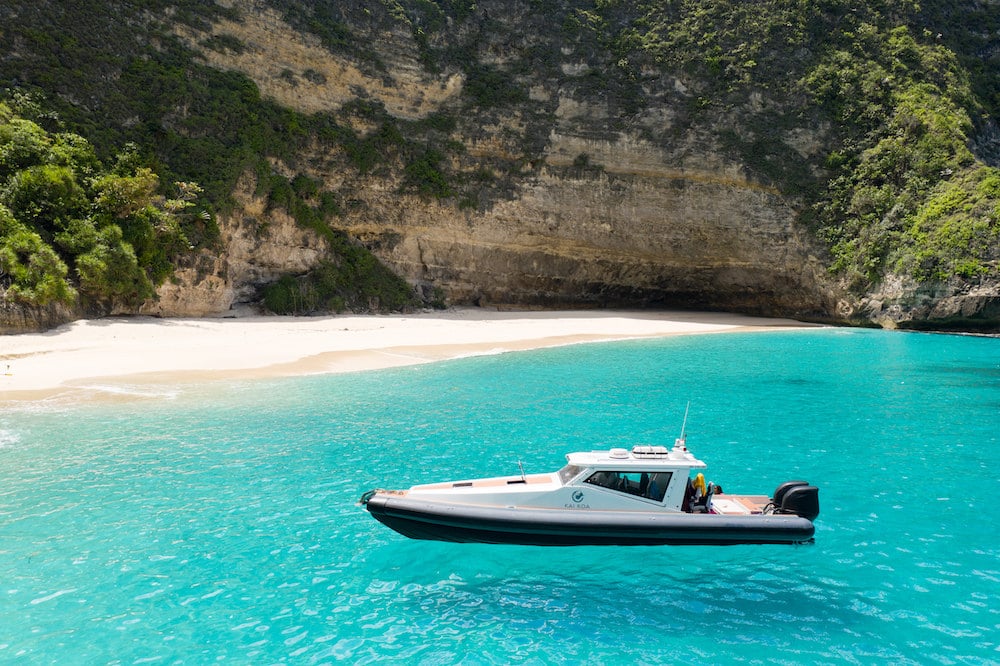
The first time you see Kai Koa, you are not entirely sure what to make of it. The boat is the wrong shape for a fishing vessel and the wrong shape for a pleasure craft and the wrong shape, frankly, for almost any commercial purpose. It is a centre-console with a hardtop, thirteen metres long, with twin three-hundred-horsepower Suzukis on the transom and inflatable rubber sponsons running the length of the hull. It looks like a military patrol boat from the bow and a sports cruiser from the stern. The teak deck has been laid by hand. The forward V-berth sleeps two. The galley is small but it has a kettle. There is room for six surfboards, a cooler, a dive compressor, and a soundtrack.
The boat was finished in 2023. Australian-designed, Indonesian-built, fitted out over the better part of a year on the boat hardstand at Serangan. The total cost, by the time the last fitting went in, was somewhere north of the price of a small house. Kai Koa is Hawaiian. It means, depending on which dictionary you trust, "ocean warrior" or "courage of the sea". Both apply.
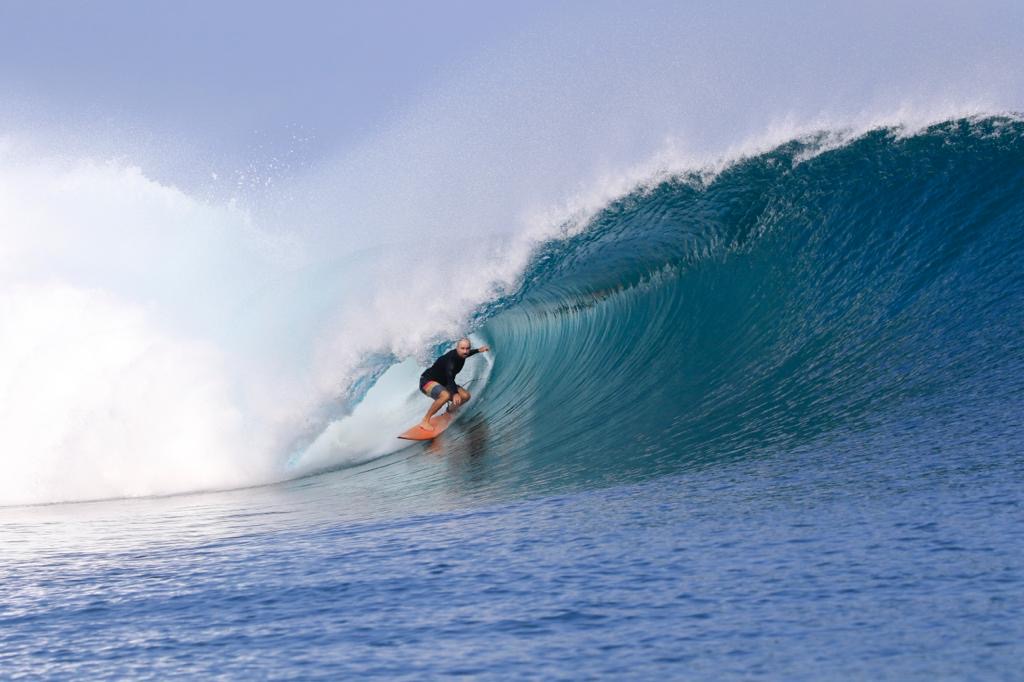
A boat like this is not a sport. It is an instrument. It exists to do one thing: get five surfers, and their boards, and their fins, and their bottles of water, to a wave that thirty other boats cannot reach. From Lembongan, in a good window, Kai Koa can be at Ekas in two hours, at Desert Point in two and a half, at a half-dozen Sumbawa breaks by the same evening. The professional surfers who hire Troy by the day or by the week — there have been many, over the years, including some of the most decorated names of the last generation — do so because the boat goes where the boat needs to go, and because the man at the wheel knows where that is, and because, when the right wave comes through and there is room in the lineup, the man at the wheel will paddle out and take one too.
He does not talk about the names. There is, in this trade, a code: you do not announce who you took where. The wave is not yours to give away. The wave belongs to the channel and to whoever happens to be there. The waterman brings the surfer to the lineup, and sometimes he is in the lineup himself, and what happens out there is between the surfer and the wave. Afterwards he runs everybody home, and at some point in the evening, on the terrace at Batu Karang, the surfers buy him a beer.